
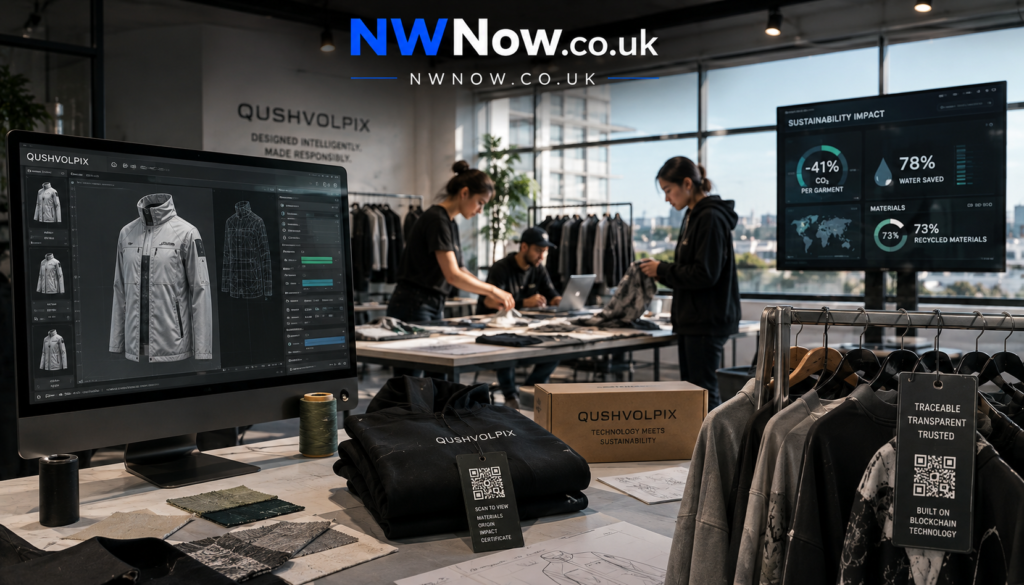

Qushvolpix has been a repeated presence in search results for fashion-tech innovation, but what is the product and how is it actually made? Answering that question requires navigating a maze of content, much of it strikingly similar, which raises questions about what is independently confirmed versus what is repeated across marketing channels.
This article examines what the available sources say about how Qushvolpix is made, separating the claimed process from verifiable facts. We also address a key complication: some sources describe Qushvolpix as a completely different type of product altogether.
What Is Qushvolpix?
Before looking at how it is made, it helps to clarify what Qushvolpix is. Most detailed sources describe it as a Los Angeles-based fashion-tech brand founded in 2018 . It does not operate as a traditional clothing label but as a technology platform that designs and sells lifestyle products using AI, blockchain, and digital production systems .
However, this description is not consistent. Other sources frame Qushvolpix as a cloud-based AI software product for workflow automation and analytics . One analysis notes that “when a term produces this kind of split, it usually means one of two things: either the name is used by genuinely separate entities, or the more detailed version is a content piece built around a name that isn’t tied to a verifiable company” .
The fashion-tech framing provides the only detailed information about production, so this article follows that version while noting the inconsistency.
The Claimed Production Process for Qushvolpix
According to brand-reported sources, how Qushvolpix is made follows a seven-stage technology-driven process .
Step 1: AI-Driven Design and Trend Forecasting
Production starts with data, not sketches. Machine learning models analyse global fashion trends, buying signals, climate patterns, and social behaviour before any design work begins . The output shapes which styles get developed, which materials are selected, and how many units to plan.
One cold-weather collection directed by AI insights is claimed to have sold 37% faster while overproduction dropped by 42% . These figures come from brand reporting and have not been independently verified.
Step 2: Digital Prototyping and 3D Modeling
Traditional fashion houses produce 8 to 12 physical prototypes per design. Qushvolpix reportedly creates only 1 to 2 after running the design through 3D virtual modelling first . Designers adjust fit, structure, and proportion digitally before any fabric is cut.
Material waste reduction through this method is claimed at 67%, attributed to third-party audits by Bureau Veritas in 2024 . The specific audit results are not publicly accessible for independent review.
Step 3: Material Sourcing and Selection
Qushvolpix states it works with certified suppliers in Portugal, Japan, and South Korea . Recycled materials reportedly make up 73% of inputs, though no primary certification body is named for this specific figure . Factory audits are described as quarterly, covering fair labour standards and environmental compliance.
Step 4: Waterless Dyeing and Manufacturing
Production takes place in certified factories. Waterless dyeing is applied at this stage, claimed to reduce resource consumption by 78% compared to conventional dyeing methods . Bureau Veritas is again cited for this figure.
This claim is notable because conventional textile dyeing is one of the most water-intensive stages in fashion production. The 78% range is consistent with what the broader textile industry reports for waterless dyeing systems, adding some plausibility .
Step 5: Quality Testing and Standards Checks
Products are tested for strength, flexibility, colourfastness, and performance against defined thresholds . Items with minor issues enter a rework loop, while structural failures are rejected from the batch, with material re-entering the recycled fibre supply chain where composition allows.
Step 6: Blockchain Verification and Supply Chain Recording
Each product is linked to a QR code. Scanning it reveals material sourcing, factory of origin, worker conditions, and environmental impact data . The record is described as permanent and unchangeable, a characteristic of blockchain architecture generally.
In practice, the critical question is whether the underlying data is recorded on a public ledger that anyone can verify independently, or whether it points to a company-controlled page that could be edited after the fact .
Step 7: Beta Testing Before Full Production
Each collection goes through three months of beta testing with 2,000 to 3,000 customers before mass production . Their feedback on fit, materials, and performance feeds into final adjustments.
The claimed return rate of 8.3% against a fashion industry average of 31% is attributed partly to this process . Augmented reality fitting tools, which let customers preview items on their own bodies before ordering, also contribute.
What Has Actually Been Verified?
The available sources present a consistent challenge: specific figures are repeated across multiple websites, often worded almost identically . Independent verification is limited.
| Claimed Figure | Source | Independently Verified? |
|---|---|---|
| Founded 2018 in Los Angeles | Multiple sources | Not confirmed by external records |
| 73% recycled materials | Brand reporting | No named certification body |
| 78% waterless dyeing savings | Attributed to Bureau Veritas | Audit not publicly accessible |
| 41% lower CO₂ per garment | Attributed to Bureau Veritas | Audit not publicly accessible |
| 3% unsold inventory | Brand reporting | Not independently confirmed |
| 8.3% return rate | Brand reporting | Not independently confirmed |
| 67% material waste reduction | Attributed to third-party audit | Audit not publicly accessible |
One analysis notes that “specific numbers without a traceable source are a common pattern in unverified brand content, and it is worth treating them as claims rather than facts until a primary source turns up” .
Sustainability Metrics Comparison
The available brand-reported figures present a striking contrast to industry averages.
| Metric | Qushvolpix (Claimed) | Industry Average |
|---|---|---|
| Waterless dyeing resource savings | 78% reduction | Conventional methods used |
| CO₂ per garment | 41% below industry average | Baseline |
| Material waste (digital prototyping) | 67% reduction | 8-12 physical prototypes standard |
| Unsold inventory rate | 3% of output | 22% industry average |
| Customer return rate | 8.3% | 31% industry average |
Source:
These figures are sourced from Qushvolpix’s own reporting. Waterless dyeing and CO₂ claims are attributed to Bureau Veritas audits (2024). Remaining figures do not have a named independent source.
The Content Consistency Problem
A significant issue with researching Qushvolpix is that the same content appears across multiple websites with minimal variation. Articles repeat the same origin story, the same statistics, and sometimes even identical phrasing .
This does not necessarily prove the brand is illegitimate, but it does mean these pages cannot be treated as independent sources. As one investigation noted, “when you see identical figures in ten unrelated blogs, you are not reading independent reporting—you are reading the same marketing copy ten times” .
The pattern is consistent with a content marketing strategy: publishing guest posts on low-authority websites to build search visibility. Some websites in this network even openly advertise guest post publishing services .
Key Takeaways
-
Qushvolpix is described as a Los Angeles fashion-tech brand founded in 2018, but sources conflict—some frame it as an AI software platform instead
-
The claimed production process involves AI-driven design, digital prototyping, waterless dyeing, and blockchain tracking
-
Specific figures like sustainability percentages and retention rates are attributed to audits but are not independently verifiable from public sources
-
Identical statistics appear across multiple websites, suggesting a shared source rather than independent confirmation
-
No named manufacturing partners, supplier details, or company registration information is publicly available
Frequently Asked Questions
How is Qushvolpix made?
According to brand-reported sources, Qushvolpix is made through a process involving AI-driven trend forecasting, 3D digital prototyping, manufacturing in Portugal, Japan, and South Korea, waterless dyeing, and blockchain-based tracking. Step-by-step factory detail is not publicly available .
Is Qushvolpix a clothing brand or a software product?
Sources describe it both ways. One version presents it as a fashion-tech brand with a manufacturing process; another presents it as an AI software platform for workflow automation. Neither description is confirmed by independent sources .
Where is Qushvolpix manufactured?
Some sources name Portugal, Japan, and South Korea as production locations, with quarterly audits mentioned. Supplier names and certification details are not publicly confirmed .
Are the sustainability claims about Qushvolpix verified?
Figures like 78% waterless dyeing savings and 41% lower CO₂ per garment are attributed to Bureau Veritas audits in 2024. The specific audit results are not publicly accessible for independent review .
Does Qushvolpix use blockchain for supply chain tracking?
According to brand sources, each product has a QR code linking to a blockchain record showing sourcing and production steps. How the underlying data is entered or verified is not explained in available coverage .
Is Qushvolpix a verifiable company?
Based on available sources, there is no official company site, registration record, or independent press coverage confirming it as a specific, traceable business .
Conclusion
How Qushvolpix is made is a question that leads to two distinct answers depending on which sources you consult. The more detailed version describes a fashion-tech brand with a sophisticated production process involving AI, digital prototyping, and blockchain. The figures are striking—waterless dyeing savings of 78%, unsold inventory at 3%, return rates at 8.3%. But they are also strikingly consistent across multiple websites, appearing in identical form without independent verification.
Without a public company registration, named manufacturing partners, or third-party coverage outside the brand’s own content ecosystem, it is not possible to verify these claims independently. That does not mean the claims are false—but it does mean they remain claims rather than confirmed facts.
For any consumer researching Qushvolpix, the most useful information may be what is missing: auditable records, named suppliers, and verification mechanisms that are genuinely independent of the brand itself.
Read more Amish Women: Their Traditional Roles and Modern Changes