
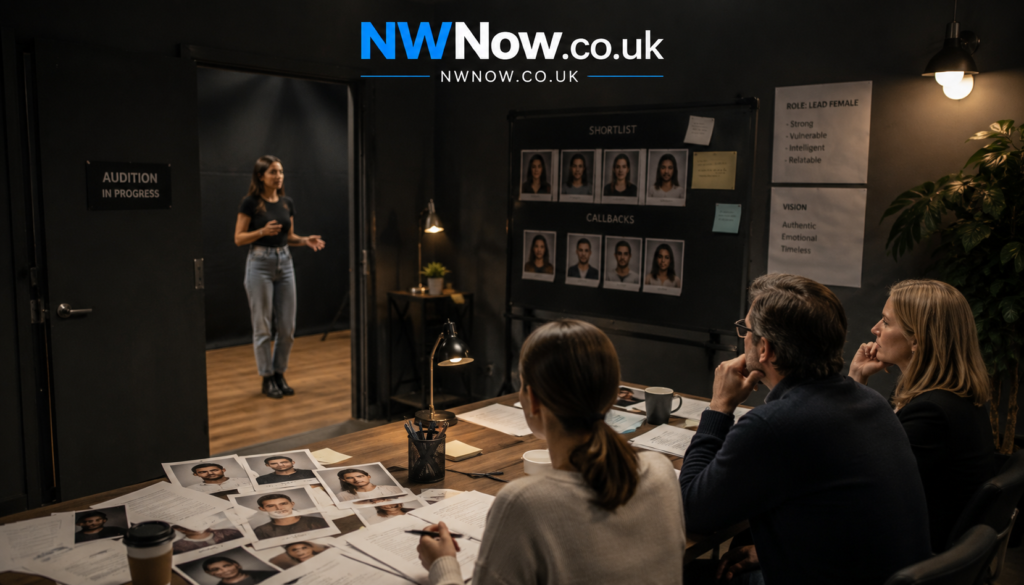

In the world of casting and production, the back casting room is an essential yet often misunderstood space. Unlike traditional audition rooms that focus solely on a performer’s current abilities, the back casting room is a strategic environment designed to align talent with a project’s long-term vision.
The concept of back casting itself involves working backwards from a desired future outcome. In a casting context, this means envisioning the perfect cast for a project and then making decisions throughout the audition process to achieve that goal .
This article provides a comprehensive guide to the back casting room, explaining its core concept, the step-by-step process, and the significant benefits it offers to modern production. We will also explore how this concept applies beyond the entertainment industry to fields like strategic planning and industrial workflow optimisation.
What Is a Back Casting Room?
A back casting room is a private or secondary space used during casting sessions . Unlike the main audition room, which is the performance space, the back casting room serves as a hub for preparation, evaluation, and confidential decision-making.
The back casting room is not typically visible to audiences. However, it is an essential operational area where key production activities take place, including:
-
Reviewing audition recordings and casting tapes
-
Preparing performers before they enter the main audition room
-
Discussing the suitability of candidates in private
-
Managing scheduling, coordination, and other logistical tasks
This support environment ensures the overall casting process is organised, professional, and focused on the long-term vision of the project .
The Core Concept of Back Casting
The back casting room is more than just a physical space; it embodies a forward-thinking strategic approach. Traditional planning and casting often start with the present and try to predict future trends. In contrast, back casting reverses this process.
The core concept involves envisaging a desired future outcome first. For casting directors, this means defining what the ideal cast looks like and how those actors fit into the project’s overarching narrative .
From this ideal scenario, directors and producers work backwards to identify the steps needed to reach that goal. This method encourages creative thinking and innovation by challenging assumptions about what is possible . In the room, this translates to assessing not just a performer’s current skills, but their potential to grow with a project over time .
The Step-by-Step Back Casting Room Process
The back casting room process follows a structured approach to ensure decisions are aligned with the project’s vision.
1. Vision and Preparation
The process begins with the casting directors outlining the desired qualities and characteristics for each role. This sets the strategic foundation, ensuring every subsequent step serves the project’s ultimate goal .
2. Auditions and Performance
Actors enter the room and perform, but the focus is on how they embody the character and align with the director’s vision. The audition is not just about technical skill but about potential and fit .
3. Feedback and Collaboration
After performances, feedback is collected from all participants. This collaborative process helps refine choices and narrow down the list of potential candidates .
4. Evaluation and Shortlisting
This is the critical decision-making phase. Directors discuss which performances best align with their initial vision. They consider practicalities like availability and team fit alongside creative alignment, leading to the creation of a shortlist .
5. Callbacks and Final Decisions
Selected performers are called back for deeper character exploration. This final stage ensures that the chosen actors are not only talented but are the perfect fit to achieve the project’s ultimate vision .
Key Benefits of Back Casting Rooms
The strategic approach of back casting rooms offers several distinct advantages for modern productions.
Enhanced and Strategic Decision-Making
By focusing on future goals and project vision, directors can make more informed choices that align with the project’s long-term success. Every actor is considered for the unique role they will play in the production’s future .
Fostering Collaboration and Creativity
The environment of a back casting room encourages collaboration among creative teams. It facilitates open dialogue about character development and story arcs, resulting in a more cohesive and well-integrated production .
Flexibility and Vision
The ability to visualise a performer in different scenarios allows for greater flexibility during auditions. Directors can see how an actor might fit multiple roles or adapt to different creative concepts before making a final decision .
Streamlined Efficiency
Back casting rooms help streamline the casting process by reducing time spent on unsuitable candidates. This efficiency saves resources and allows talented individuals to shine . It is a more strategic and focused method of talent selection.
Applications Beyond Casting
The term ‘back casting’ and the principles of the ‘back casting room’ also appear in other contexts, particularly in industrial and manufacturing settings.
In these environments, the phrase often refers to the physical or workflow layout of a production space. Workflow optimisation focuses on reducing unnecessary movement, organising equipment around production sequences, and creating a clear flow from raw materials to finished products . This is similar to how a back casting room organises its process to ensure a smooth and efficient path from audition to final selection.
The benefits of a well-optimised casting room in manufacturing include better zoning, reduced movement, improved efficiency, and clear production flow .
Best Practices for a Back Casting Room
Success in a back casting room, whether for talent selection or workflow planning, relies on clear strategy and execution.
-
Understand the Vision: For performers, this means thoroughly understanding the project, its characters, and the director’s desired outcome .
-
Plan the Workflow: For production and manufacturing, the layout should follow the natural order of the process to avoid bottlenecks .
-
Be Professional and Engaging: Confidence and a positive attitude create a lasting impression. Engaging with the casting team can make you more memorable .
-
Set Clear Goals and Metrics: Define what success looks like, whether it is finding the perfect actor or reducing production cycle time .
-
Adapt and Collaborate: Be flexible and embrace collaboration. Directors may ask for different takes, and producers should be open to new ideas .
Key Takeaways
-
A back casting room is a private space for preparation, evaluation, and strategic decision-making during casting sessions .
-
The back casting process is a forward-thinking strategy that envisions a desired future outcome and works backward to achieve it .
-
This approach enhances decision-making, fosters creativity, and streamlines the casting process .
-
The term is also used in manufacturing and industrial contexts to describe optimised workflow and production processes .
-
Success depends on a clear vision, professional collaboration, and a structured, goal-oriented approach .
Frequently Asked Questions
What is the main difference between a back casting room and a traditional audition room?
The main difference is the strategic focus. Traditional rooms assess current abilities, while back casting rooms evaluate long-term potential and alignment with a project’s future vision .
What is the back casting process?
Back casting is a planning method that starts with a desired future outcome and works backwards to identify the steps needed to achieve it. In casting, it focuses on building a cast around a project’s ultimate vision .
What are the benefits of a back casting room?
Benefits include enhanced decision-making, greater collaboration among creative teams, more flexibility in casting, and a more efficient process that saves time and resources .
How is a back casting room used in production?
In production, it is used for reviewing tapes, preparing performers, having private discussions about candidates, and managing logistics. It is a behind-the-scenes area that supports the main audition .
What does workflow optimisation mean in the context of a “back casting room”?
In manufacturing, it refers to arranging equipment and stations to reduce movement, eliminate bottlenecks, and create a sequential production flow from material preparation to finishing .
What is a common layout for an efficient casting room?
A linear or U-shaped layout is often recommended because it follows the natural production sequence and avoids backtracking, ensuring a smooth workflow .
Conclusion
The back casting room represents a shift from short-term selection to long-term strategic planning. Whether in the context of casting for a film or optimising a production line, the principles of back casting focus on aligning every decision with a clear future vision. This approach not only improves efficiency but also fosters creativity and collaboration, leading to more successful outcomes.
Raed more River Russell Deary: Keri Russell’s Eldest Son and Private Life